


Canyon de Chelly National Monument: History, culture, and summer travel guide

There are moments, just after sunrise and sunset, when the sandstone walls of Canyon de Chelly National Monument shift from deep red to amber. Light moves slowly across the canyon, revealing vertical faces carved over millions of years by water and erosion. It’s a striking landscape, defined not simply by its geology, but also by the continuity of human presence.
Unlike most sites managed by the National Park Service, Canyon de Chelly is both protected and lived in. The monument sits within the Navajo Nation, and Diné families continue to reside, farm, and raise livestock on the canyon floor. Cultural sites are not isolated remnants—they exist within a landscape that has remained inhabited for generations.
Read on to learn more about this significant park.
The landscapes and structures protected here are on the homelands of, and are important to, Indigenous peoples.

Layered history
Human presence in Canyon de Chelly spans thousands of years. The most visible cultural features are the cliff structures built by the ancestral Puebloans between approximately 350 and 1300.
The name “Canyon de Chelly” reflects a layered linguistic history shaped by Indigenous, Spanish, and later American influences. At its root is the Navajo word Tséyiʼ, meaning “within the rock” or “inside the stone canyon.” This reflects a lived understanding of the canyon as a place defined by its towering walls and the life within them.
The Spanish later adapted Tséyiʼ into “Chelly,” a phonetic approximation shaped by Spanish pronunciation, and added “Cañón de” (“canyon of”), forming “Cañón de Chelly.” As English became dominant, the spelling shifted to “Canyon de Chelly,” while the pronunciation—“deh-SHAY”—remained rooted in Spanish.
Though the name appears Spanish, it ultimately preserves both influences: a Navajo origin in meaning and sound, and a Spanish structure in form—reflecting the layered cultural history of the Southwest.
Canyon de Chelly Photos
Get inspiration for your trip as you enjoy these photographs of Canyon de Chelly National Monument.


1 of
Travel tips
Summer travel considerations
Summer in northeastern Arizona brings high temperatures, often exceeding 90°F (32°C).
Visitors should plan accordingly:
- Begin visits early or later in the day
- Carry sufficient water
- Remain on designated routes
- Do not enter restricted areas or the canyon floor without a guide
Why Canyon de Chelly is distinct
Canyon de Chelly differs from many other canyon landscapes in the Southwest because it is both protected and inhabited. The monument is managed through a partnership between the Navajo Nation, the National Park Service, and the canyon community, and much of the land within the monument is used by Diné (Navajo) families. This means visitors are not just observing a preserved environment—they are entering a living cultural landscape where past and present exist simultaneously.
Respectful visitation during any time of year is important.
A lasting presence
One of the most well-known sites is White House, named for the white plaster used on part of the structure. Positioned about 600 feet above the canyon floor, it can be viewed from overlooks or accessed via the White House Trail—the only self-guided route into the canyon.
The Diné (Navajo people) established a lasting presence in the canyon by the 1700s. Their history includes both long-term stewardship and periods of forced displacement, particularly during the 1860s, when US military campaigns led to the Long Walk of the Navajo. Many Diné families later returned, and today the canyon remains an active place of residence, agriculture, and cultural practice.
Key landmarks along the rim
Most visitors experience Canyon de Chelly from two scenic drives along the rim, each offering distinct perspectives.

Spider Rock at sunset, Canyon de Chelly National Monument, Arizona.
South Rim Drive
The South Rim Drive includes several of the monument’s most recognized viewpoints:
- Spider Rock: Twin sandstone spires rise from the canyon floor. Spider Rock is one of the canyon’s most recognized landmarks and carries cultural significance in Diné tradition.
- Tsegi Overlook: A vantage point where Canyon de Chelly and Monument Canyon meet.
- White House Overlook: The primary viewing area for the White House structure.


Sunrise at Navajo Fortress separates Canyon del Muerto from Black Rock Canyon, best viewed from the North Rim Drive.
North Rim Drive
The North Rim Drive is less visited and offers a quieter experience:
- Mummy Cave Overlook: The largest ancestral Puebloan village preserved in Canyon de Chelly, siting about 300 feet above the canyon floor, with close to 70 rooms.
- Antelope House: A remarkable site viewable from the North Rim.
- Expansive viewpoints that emphasize the canyon’s scale and relative isolation.

Access to the canyon floor
Beyond the White House Trail, access to the canyon floor requires a permit and an authorized guide. Guided experiences often include:
- Visits to additional cultural sites
- Context about land use, farming, and seasonal rhythms
- Oral histories and perspectives rooted in lived experience
Head out for adventure
Packing List
We recommend bringing the following items on your trip.
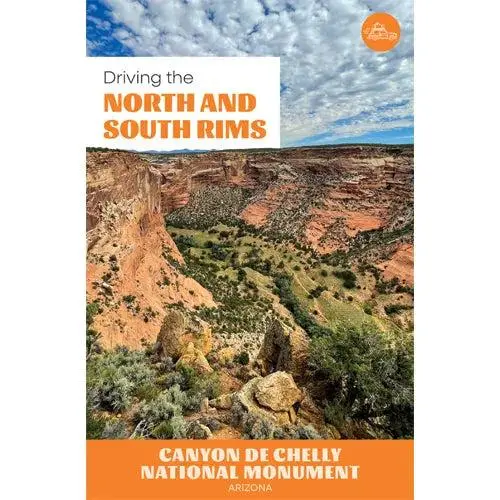
- Canyon de Chelly National Monument: Driving the North and South Rims, an essential travel companion with important cultural descriptions of the all the stops along both rim drives.
- Sun protection items such as sunscreen, sunglasses, and a wide-brimmed hat.
- Plenty of snacks and water. Be sure to drink before thirst and often in this high desert climate.
- Layers, including rain gear, so you are prepared for different temperatures and weather.
- Sturdy, closed-toed shoes for hiking. Even paved paths might are most comfortably experienced with sturdy shoes.
- Activity-specific gear, such as binoculars for bird watching and your camera of choice.
Remember to check weather conditions and alerts at nps.gov, pack appropriately, and respect the natural environment and cultural resources to ensure a safe and enjoyable trip. Start planning your trip to this storied cultural site today.
